
Discovering the Wonders of Death Valley National Park: My Journey, Tips, and Stunning Photos

Updated: 1 day ago
Visiting Death Valley National Park might sound intimidating because of its name and reputation for extreme heat. Yet, this vast desert landscape offers some of the most unique and breathtaking natural sights in the United States. My recent trip to Death Valley opened my eyes to its surprising beauty, rich history, and the adventure it offers to travelers willing to explore beyond the usual tourist spots. In this post, I’ll share my personal experience, practical tips for your visit, and a glimpse of the stunning scenery through photos.

This post may contain affiliate links, meaning I receive a commission if you purchase through my links, at no extra cost to you.
My Journey Through Death Valley
It's a long drive from Denver to Death Valley, so we chose a hotel in Pahrump, Nevada, for an overnight stay. Since Pahrump is about an hour from the park, we woke up early to begin our exploration. Our first destination was Dante's View, which provided stunning views of the valley and Badwater Basin. A short trail from the parking lot allowed us to get a more direct view into the valley. I was thrilled to be traveling during the Christmas season and made sure to snap a photo in my Christmas sweatshirt before it got too warm and I no longer needed it!

The next destination was Zabriskie Point. It's just a 1/4 mile walk from the parking area along a paved path. At the top, you can view the yellow-hued badlands, the salt flats on the Death Valley floor, and the Panamint Mountains towering above.

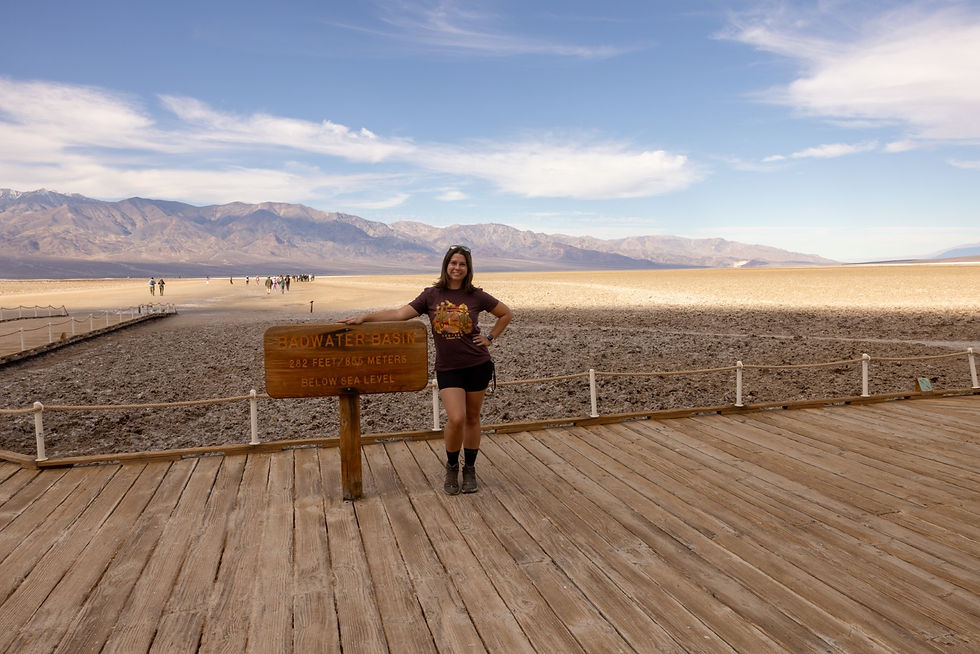
After a quick stop at the Visitor Center in Furnace Creek to inquire about some of the road closures, we headed to Badwater Basin, the lowest point in North America at 282 ft below sea level. In November, the park experienced a high level of rainfall. While this did result in a lot of flooding and road closures, all that rain meant the return of Lake Manly! The place was amazing to experience and the perfectly still water gave stunning reflections of the surrounding landscape.

Our next stop was Devil's Golf Course, named for its razer-sharp salt crystal formations where "only the devil could play golf". It was so fun to wander through the mounds - just be careful as they can be sharp and fragile. Since there aren't many lunch options at the park we brought supplies with us to make sandwiches and chose this spot for our meal. I'm glad we did! While enjoying our lunch, we overheard someone talking with the park ranger about a salt pool that had formed. We gathered that this must be a pretty rare event, as the ranger said he hadn't seen one yet. After lunch set off to find it. I was expecting a small puddle like when ice on a lake melts and refreezes. What we saw was probably 5 feet wide and 5 feet deep, filled with crystals like you might see inside a cave. I can't believe how fortunate we were to see this!


One of the sites I most wanted to see in Death Valley was Artists Palette. Unfortunately, the road there was still closed due to flooding so we weren't able to go. When we asked the ranger at the visitor center if we could still walk to it he suggested we try this hike instead as it has some of the similar colors in the rocks like Artists Palette. We ended up loving this hike. We got to wander through slot canyons and climb up dry waterfalls. My thighs were hurting by the time we finished but it was worth it!

While I had several other hikes on my wish list, we only had time for one more before sunset so we chose Mosaic Canyon. The beginning of the hike had rock formations that had a mosaic look to them. Almost like natural concrete. Very cool. There were more slot canyons here and more waterfalls to climb up.

While we didn't have enough time to actually explore the Mesquite Sand Dunes, I couldn't leave without saying I'd at least seen them. Compared to the Great Sand Dunes here in Colorado, they weren't that impressive so I didn't feel like I missed a whole lot. Since we had a 2 hour drive to our next hotel we needed to get going. We were exhausted at this point and couldn't wait to soak our tired legs in the hot tub.

Tips for Visiting Death Valley National Park
Visiting Death Valley requires some preparation to ensure a safe and enjoyable experience. Here are some practical tips based on my trip:
Visit during cooler months: The best time to visit is from late fall to early spring. Summer temperatures can exceed 120°F (49°C), which is dangerous for outdoor activities.
Start early or late: Plan hikes and drives early in the morning or late afternoon to avoid the hottest parts of the day.
Bring plenty of water: Carry at least one gallon (4 liters) of water per person per day. Dehydration is a serious risk.
Check your vehicle: Make sure your car is in good condition, with a full tank of gas. Services are limited inside the park.
Use sun protection: Wear a hat, sunscreen, and lightweight, long-sleeved clothing to protect from sunburn.
Stay on marked trails: The desert ecosystem is fragile, and it’s easy to get lost. Stick to designated paths and roads.
Download offline maps: Cell service is spotty, so having offline maps or a GPS device helps with navigation.
Plan your route: The park is huge, so prioritize the sights you want to see. Some roads are unpaved and require high-clearance vehicles.
Highlights and Must-See Spots
Death Valley offers a variety of attractions that showcase its diverse environment:
Dante’s View: A viewpoint over 5,000 feet above the valley floor.
Zabriskie Point: Famous for its eroded badlands and panoramic views.
Badwater Basin: North America's lowest point at 282 ft below sea level.
Devil’s Golf Course: A vast salt pan with jagged salt formations that look like a rough golf course.
Desolation Canyon: 3.6 mile out and back trail with views of Badwater Basin and Artist's Palette
Mosaic Canyon: Scenic hike known for its colorful, polished marble walls and unique "mosaic breccia" rock formations.
Mesquite Sand Dunes: Best known and easiest dunes to visit in the park.
What to Pack for Your Death Valley Adventure
Packing smart makes a big difference in comfort and safety:
Water bottles or hydration packs
Lightweight, breathable clothing
Sturdy hiking shoes
Sun hat and sunglasses
Sunscreen with high SPF
Snacks and energy bars
Camera or smartphone for photos
First aid kit
Flashlight or headlamp if staying late
Capturing the Beauty of Death Valley
Photography is a rewarding part of visiting Death Valley. The park’s unique light and colors create dramatic scenes. I recommend:
Shooting during golden hours (sunrise and sunset) for warm, soft light.
Using a wide-angle lens to capture vast landscapes.
Bringing a tripod for stability during low light.
Experimenting with close-ups of textures like salt crystals, sand ripples, and rock formations.
Don't have time to read now? Pin this page to start planning your future Death Valley trip!


Comments